
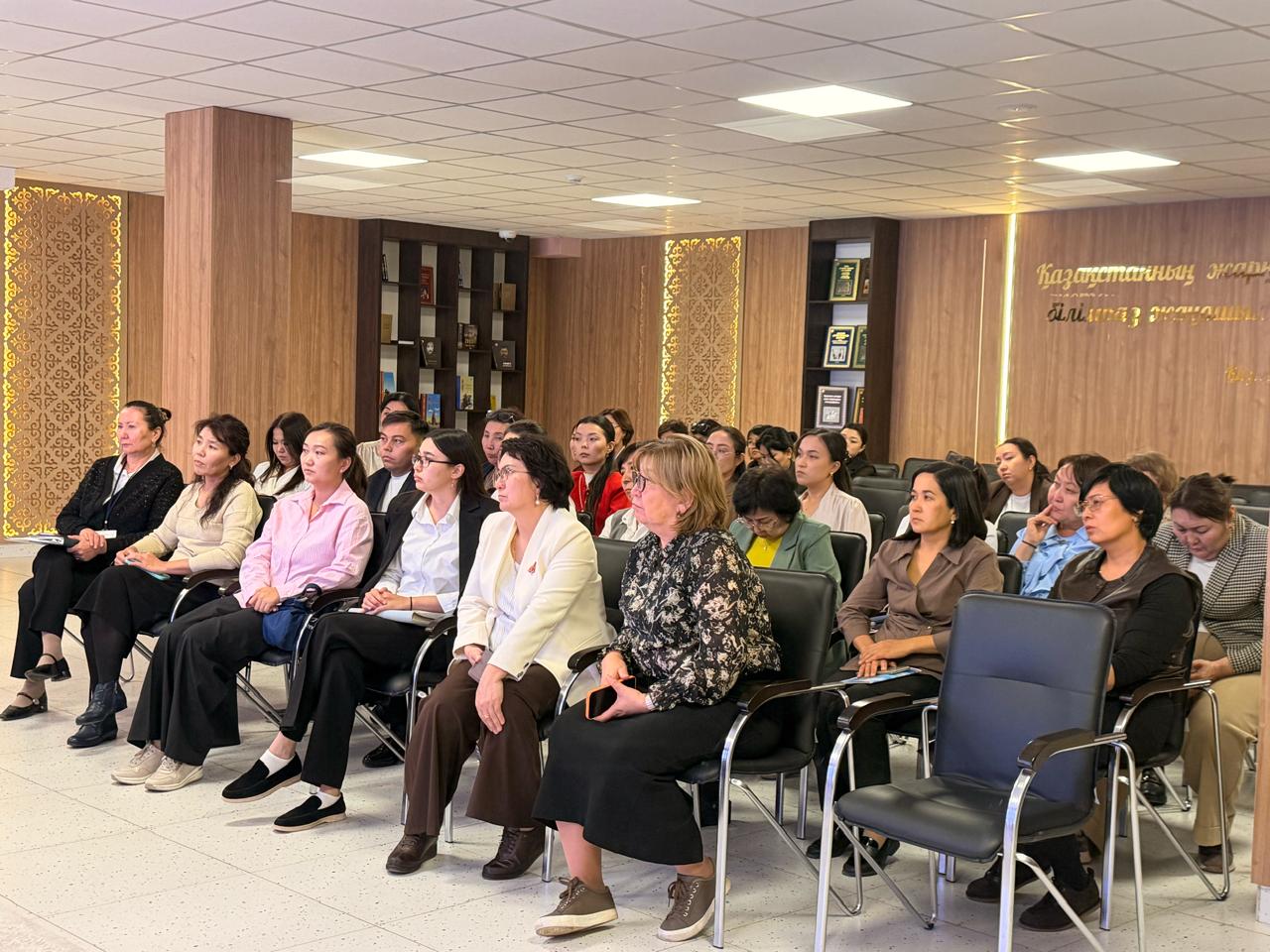
A training seminar entitled “Preparing a Self-Assessment Report for a Secondary Education Institution within the Framework of Institutional Accreditation” was held at General Education School No. 101 “Keleshek” in Astana.
The seminar was attended by the school principal, deputy principals, heads of subject teaching groups, and teaching staff.
The seminar marked an important stage in the school’s preparation for institutional accreditation and enabled the teaching staff to consolidate their understanding of the forthcoming procedures, self-assessment requirements, and the preparation of reporting materials.
Accreditation: From Understanding the Procedure to Informed Self-Assessment
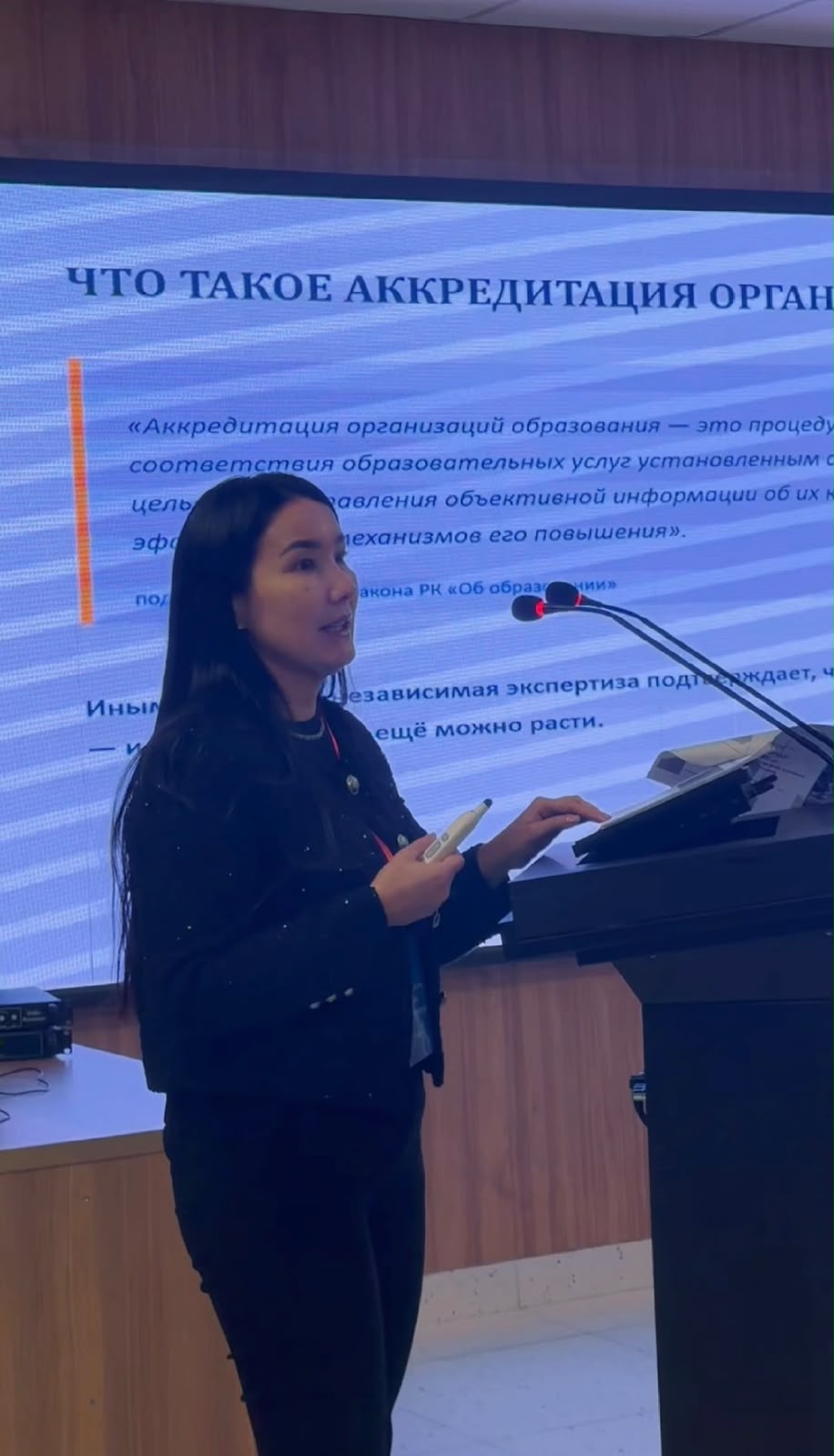
The seminar’s substantive presentation was delivered by A.M. Makazhanova, Director of the Department for Accreditation of Preschool and Secondary Education Institutions.
The presentation examined key issues concerning the institutional accreditation of an educational institution in detail: what accreditation is, how it is conducted, the main stages of institutional accreditation, and the procedure for external evaluation.
Particular attention was paid to institutional self-assessment as an important tool for the internal analysis of school performance. Participants discussed how self-assessment helps an educational institution prepare for external evaluation, recognise its strengths, identify areas for further development, uncover existing problems, and outline ways to address them.
The main provisions and requirements concerning the preparation, structure, and content of the self-assessment report were also addressed separately.
How to Prepare a Substantive, Evidence-Based Report
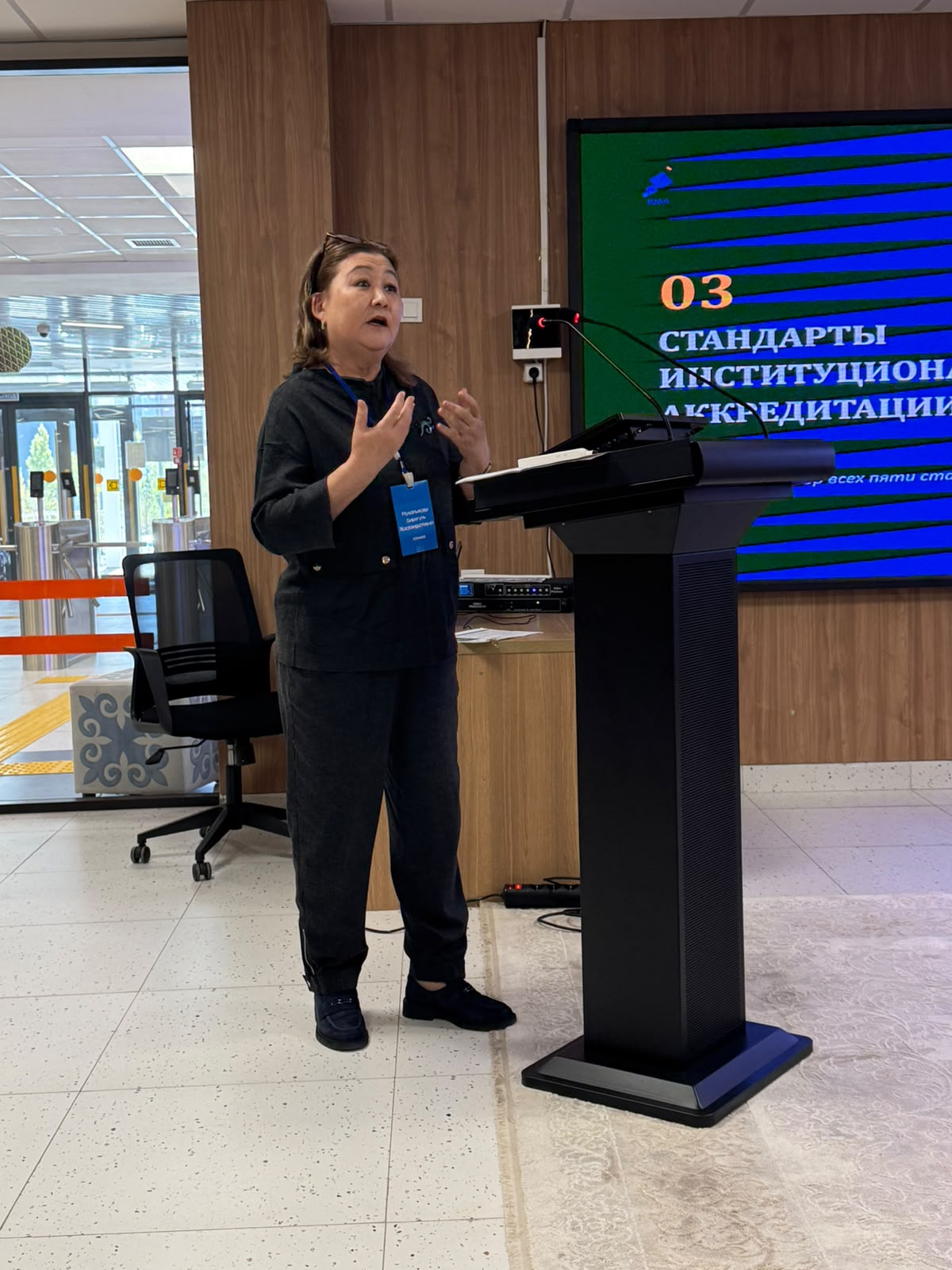
The practical part of the seminar was led by Chief Expert B.Zh. Mukalykova, who examined each of the standards included in the institutional accreditation procedure in detail.
Participants received explanations of what to focus on when preparing the report, how to analyse school performance against the requirements of the standards, and what evidence should support the conclusions presented.
Particular emphasis was placed on the principles of high-quality self-assessment. The report should be the result of thorough and objective analysis rather than a formal description of school activities. Self-assessment should be transparent, analytical, and based on specific facts and evidence.
During the seminar, teachers received methodological guidance and had the opportunity to discuss emerging questions, clarify individual requirements, and relate them to the working practices of their own educational institution.
Educational Quality Practices: The Experience of Accredited Schools
The part of the seminar devoted to educational quality practices attracted particular interest.
Drawing on the experience of schools that had already undergone accreditation, B.Zh. Mukalykova highlighted both successful and problematic practices in educational quality.
This approach enabled participants to consider self-assessment through both requirements and criteria and real examples of educational institutions’ work. Participants were able to see which practices demonstrate sustained quality and which aspects require deeper analysis, a systematic approach, and supporting evidence of specific results.
Self-Assessment as a Foundation for School Development
The seminar provided the teaching staff of School No. 101 “Keleshek” with an important platform for professional dialogue and shared reflection on the work ahead.
Institutional accreditation is more than an external evaluation procedure. It is an opportunity for an educational institution to examine its own performance objectively, recognise its achievements, identify opportunities for growth, and establish directions for further development.
The knowledge and practical recommendations gained during the seminar will provide a foundation for the staff’s further work on the self-assessment report and help them approach the process systematically, consistently, and responsibly.